I always enjoy this time of year, but I know many who live in the north do not share my sentiments. Right now, as I am writing this, there is about 12” of snow outside and a temperature of 18 degrees. Don’t get me wrong, I see winter as the ultimate time for dreaming and setting my intentions for the following year. It is also a great time for planning and deciding how I will make these dreams a reality.

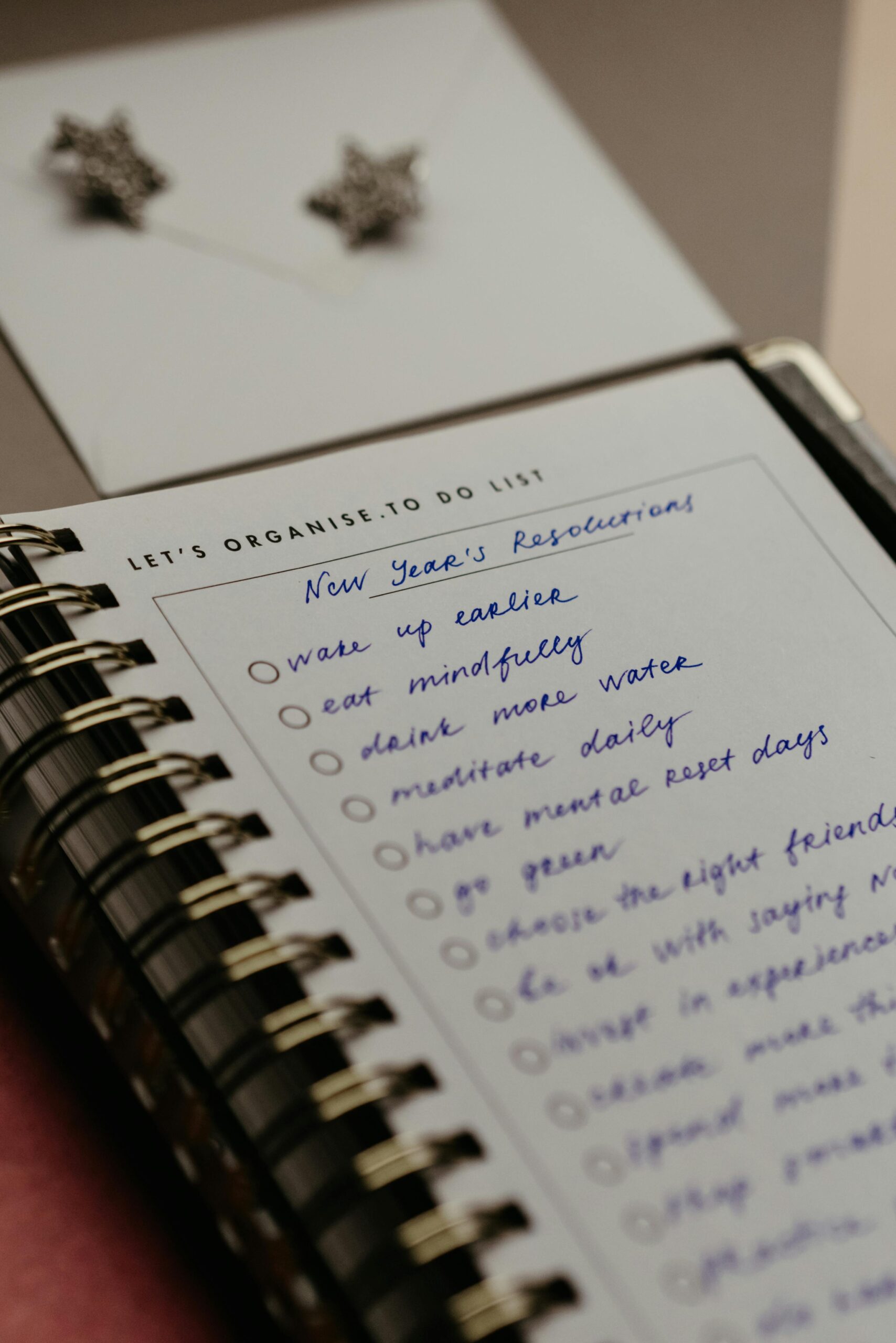
For me, winter is not a time of boredom. In fact, I always find myself almost too busy with charting my course for the next 11 months. I like to divide the task into several areas, such as health, financial / business, and things that bring me joy. Resolutions are not necessarily a bad thing, and every plan begins with knowing an area where you want to improve. The problem is that most people start the year with a big stated goal and a lot of enthusiasm, but lack a real plan to carry it out. The graveyard of failed resolutions starts filling up somewhere around January 15th.
What Goals Are Worth Pursuing?
For some years, under the advice of several well-known Internet gurus, I included goals for relationships and spiritual work. I have stopped doing that. It isn’t that these are not good things to work on, but relationships are not always something that you have control over. Feelings are too subjective to measure.

As far as the spiritual aspects are concerned, you can make plans for having a consistent practice, but might not find yourself any more enlightened at the end of the year than when you started just because you practiced mindfulness for so many days. It is a good idea to establish the habit of doing these practices, but I am not exactly sure how you set a goal for something that is intangible. For instance, how do you measure your level of compassion for others over time? Was it how many times you held your tongue instead of making a well-deserved snarky remark, or was it how many times you smiled at a stranger?
Keep It Real
Now that we have the things I don’t measure out of the way, it is time to move on to measurable goals. Instead of making pie-in-the-sky resolutions, I focus on putting systems in place that will help me build habits to get me where I want to go.

A resolution might say, I want to have a hot body by June. For some that might mean losing an unrealistic amount of weight in a short period of time. It is also not defined in a way that it can be measured. A feeling of failure is your worst enemy. You might start out filled with excitement. You’ve made promises about avoiding the snack aisle. But will those promises still hold up when you skipped your lunch and find yourself hangry in Aisle 11?

This is exactly why I develop systems to back up my resolutions. For instance, instead of saying that I want to lose 20 pounds, I will make a schedule that I can stick to in my eating habits, intermittent fasting, and getting movement. When putting these habits in place, I find that small and consistent is better than ambitious and inconsistency that leads to burning out. For instance, if I find that I cannot stick to 30 minutes of exercise a day, I start with 15 or even 5 and work my way up. If it feels doable and achievable, it is.

That brings up another thing. Finding a way to track goals in a tangible way is another important part of the planning process. I love to use coloring pages where I can fill in a section every time I meet one of my micro-goals. Seeing the page fill up with color gives me a sense of accomplishment. Missing a day is not a failure. Things do occasionally go awry and sometimes in spectacular ways. Trackers let me see that even though I skipped a workout on Thursday, I actually did do it three out of five days. It’s there in living color. We know that we are more likely to repeat something that makes us feel good rather than punishing ourselves for our shortcomings.

I have been building sustainable systems and avoiding the resolution trap for nine years now, and they have not failed me yet. If something happens and I fall off the wagon – sometimes literally - I have not failed. I simply start where I am, step things back a bit for where I am now and get right back up. The key here is not looking for fast results. Slow and steady with a good plan, even with a few fumbles in between, is the way to go. Remember the children’s story of the Hare and the Tortoise. Who won the race?

So how are those resolutions coming along? There’s still time to change the road you’re on.