Have you ever found yourself sitting down to do some knitting, crochet, or any of your favorite hobbies, and the hours just seem to slip away? Something interrupts you, or you feel hungry. You look up at the clock and, to your surprise, hours have passed, not the 20 minutes you planned. Do you ever find yourself feeling calmer only a few stitches into the work? This is not your imagination, and now, science has proven that “Grandma Crafts” affect our brain chemistry and have demonstrable positive results.
I picked up my first pair of knitting needles at age 8. I was in 4-H and knitting a pair of slippers would be my first project. The plan was that once a week, I would go to my advisor’s house, and I would work on them under her close supervision. It did not go as planned. It was love at first sight, and I finished my first pair in the first week. I did not know then why I loved it so much. I did know that I couldn’t get enough. Knitting would be the gateway to crochet, spinning, weaving, and a gazillion other arts and crafts over the next 52 years.
Feeling Restless, Overwhelmed, or Anxious? Try Art
If your first instinct when you are feeling stressed is to want to grab a cup of tea and find a quiet place for Grandma Crafts, then you are not alone. Studies confirm that even engaging in creativity for just ten minutes a day can measurably reduce cortisol levels, a hormone that increases with stress. (1) It did not matter whether the participants in the study had prior art experience or were total beginners. Nearly 75% of study participants reported that they felt calmer after only a 45 minute art session, and their hormone levels supported it.
The best part is that it does not have to be artwork or crafts. ANY creative activity, such as cooking a meal, baking bread, or up-cycling old furniture produces the same effect. What you do does not matter. Your mental state when you are engaged in a creative activity is what counts for your mental and physical well-being.
Flow State
When you pick up a creative activity, something remarkable happens. The racing thoughts begin to quiet. Your shoulders relax and the body softens. You begin to focus on what you are doing and the outside world seems to fade slowly from your attention. This what is known as flow state, and science says it is good for you.
Flow state happens when parts of your brain activate that are tied to motivation, reward, and emotional calmness. When you are in flow state, you are free from constraints. It is not about creating your masterpiece, but is about play and exploration. The focus is inward on the self and not on the outside world with all its chaos and pressures.
Flow state can feel like you are wrapped in a warm cocoon, protected and safe to be with your thoughts and innermost feelings. Your inner child can play. You lose track of time and experience the present moment fully. This is something the outside world seldom has to offer. If you have experienced this, even if you did not know what it was, you know exactly what I am talking about.
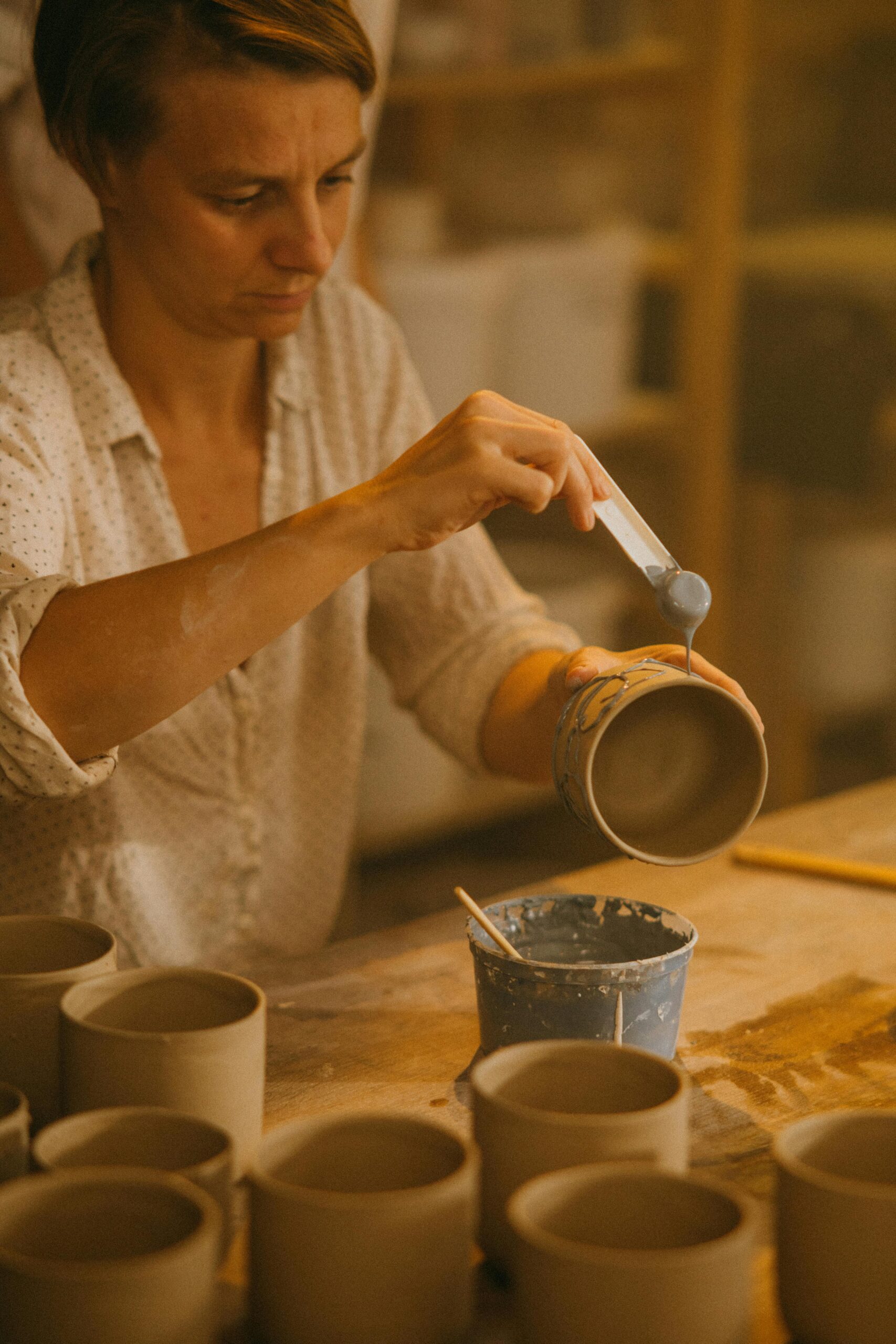
I work in a studio where people come to paint ceramics and do art. I don’t know how many times I have had to very gently remind someone that it is close to closing time. I can tell they were “in the zone” and will often say that they had no idea how much time had passed. I am always delighted because they have just experienced exactly what art is all about.
Practice Makes Perfect
The one thing research found is that there are many activities that can let you get into a flow state, but this is not a one and done deal. Like anything else, practice makes perfect. You might not achieve it every time you sit down to craft, but as your brain learns that this is a time to let go, you will find it easier to get into the flow.
You can even use this time to think about things and work through life’s challenges. Here are a few tips for getting into flow state and unleashing your creativity.
- Have no expectations. If you think about getting into flow state and can’t seem to do it, you might become frustrated. This can stop you from getting into the flow. Just sit down with the intention of doing your craft and nothing else, no judgment and no expectations.
- Flow state and a calm mind are a muscle. The more time you spend in a state of anxiety and worry, the more your brain has practiced being in that state. It might take time and practice to teach it to go the other way.
- When you first sit down and pick up your tools, take a few deep, slow breaths. This is how we breathe when we are calm. Sometimes, this can force your brain to slow down. It sends the signal that you are safe and all is well. This is sort of like working the system in reverse, and it works.
- Try to pick a time when you are less likely to be interrupted, even if this is just a few minutes. Nothing pulls you out of flow state more than the outside world.
- Turn off your phone notifications and only use technology if you have a favorite music selection that takes you away. Try finding a place out in nature or a special place in your home where you can be away from the world for a bit. It will all be there when you get back.
You can think of or visualize a topic before you sit down to create. Your mind will work on it, and as you get into the creative flow, you might find solutions you had not seen before. Our brain experiments when we are in a playful, creative state. It starts putting things together in different ways, and that is where the power of creativity lies. You might find that as your hand moves the brush across the canvas, you suddenly see a practical solution to something in the outside world.
Creativity is a kind of emotional first aid. Even small moments of creativity can help calm you when you are feeling stressed. I use repetitive crafts, such as knitting and crochet as part of my evening routine for winding down and preparing for sleep. When I do this, I go to sleep with a calm mind and wake up refreshed and ready to begin my day. The next time you can’t sleep or stop thinking, try picking up your favorite art or craft and give it a go.
(1) https://www.sciencedaily.com/releases/2016/06/160615134946.htm
For more about the neuroscience behind flow state, check out this article.