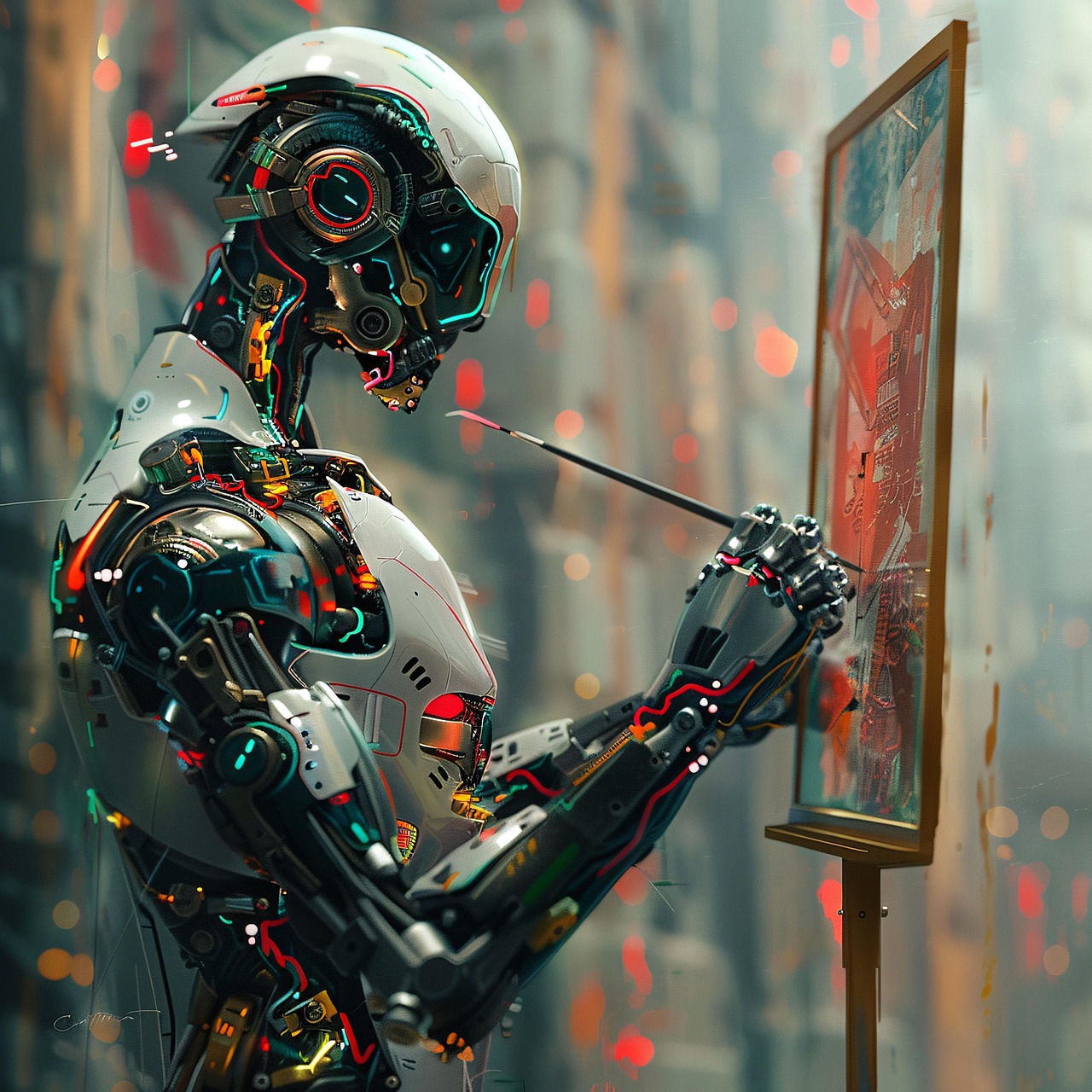
AI is here to stay, whether you are happy about this or not. So many voices are telling us that we need to stay relevant. We need to be up with the times. I don’t entirely disagree with this, and feel that AI can be an incredible tool for society. I also feel that this statement must come with a word of caution, especially when it comes to creativity and the arts.
AI has the ability to help you create things instantly, but is this always a good thing? Yes, it is easy to tell Chat GPT to create 20 renditions of a prompt. You can then get these pieces of artwork online and have them for sale as a non-fungible token (NFT) or digital download quickly. AI can help increase the volume of your artwork, presumably freeing you to enjoy the fruits of its labor and have more time to drink mimosas on the beach. This is all good and well, but there is another side.
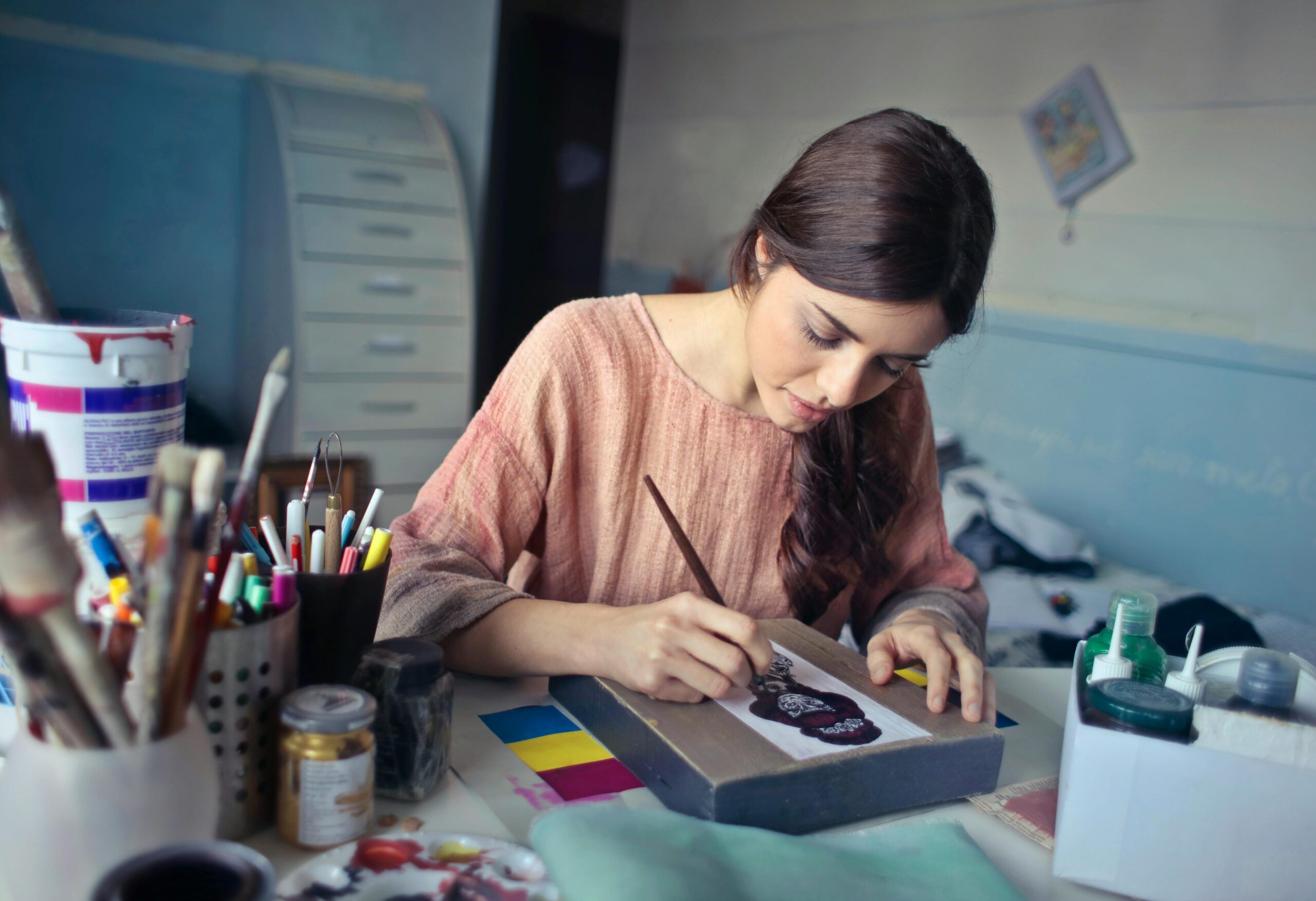
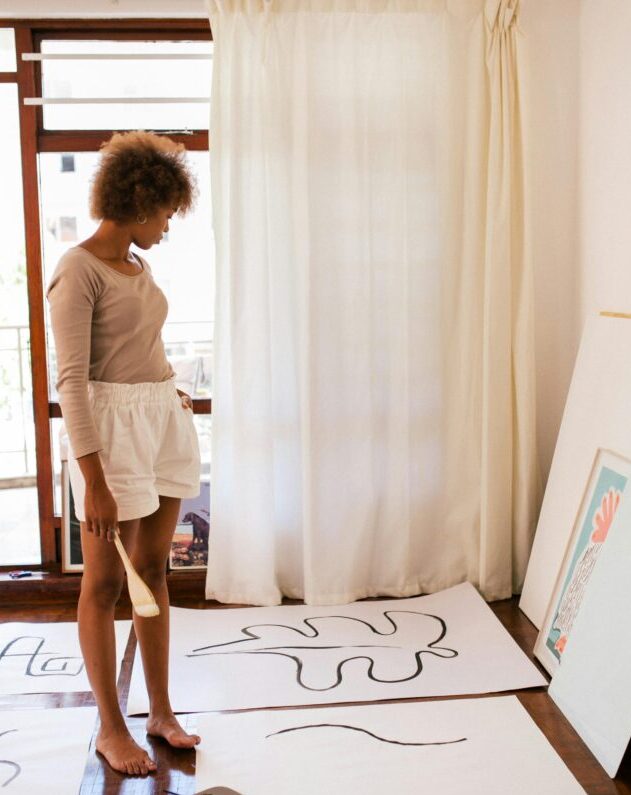
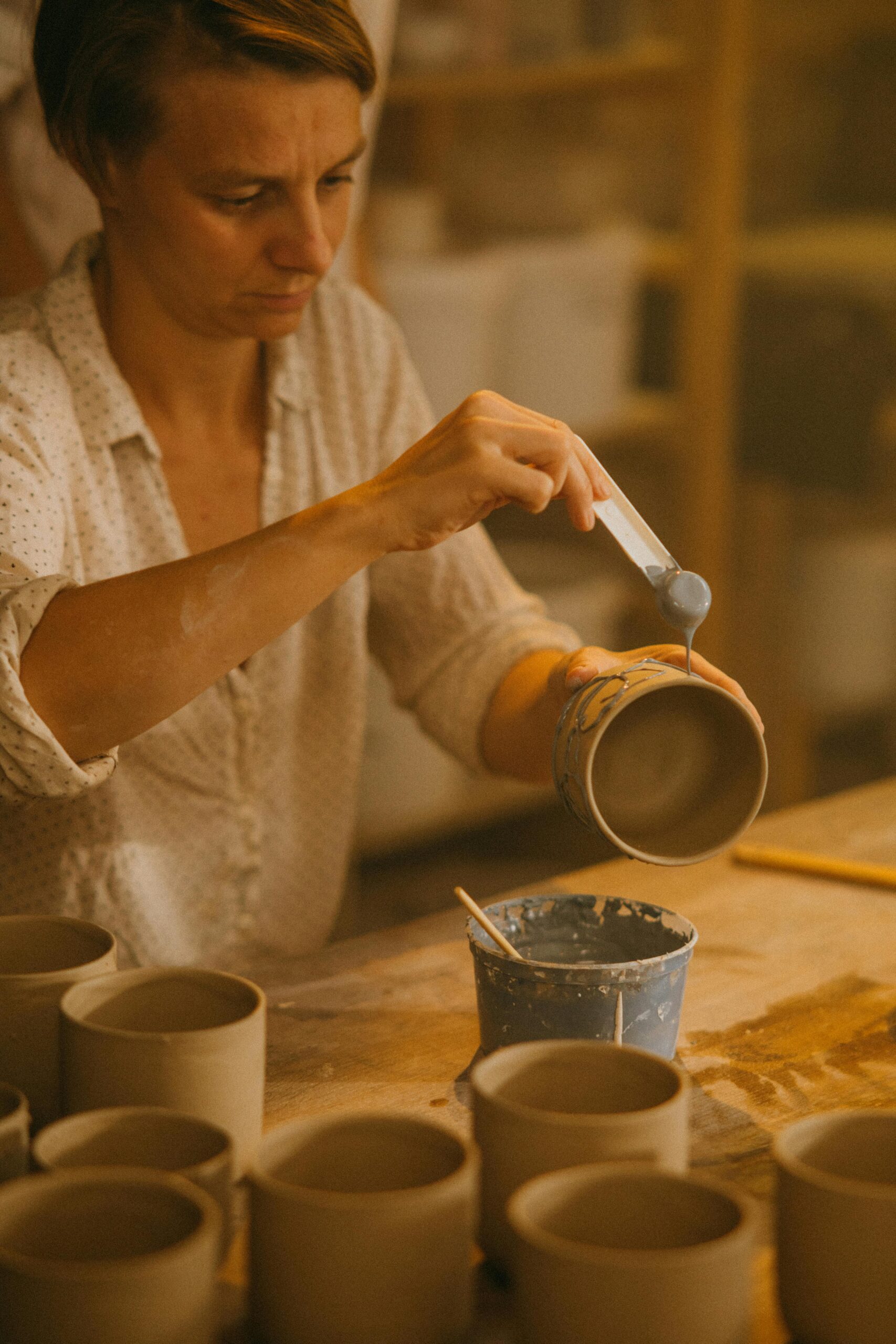
When using AI tools, it seems like magic and there is some amount of instant gratification, but you are creating without the sense of touch. It is not the same as experiencing the feel of the paint gliding across the canvas, or the feel of the clay slipping through your hands. You can’t feel the wood carving blade as it separates slivers from the log or the feel of the fibers as they slide through your fingers on their way to become yarn. This might not seem like a big deal, but to artists who handcraft, it is everything. This is something that AI can not replicate and never will. This sensory element to art is also something that humans need more than they might realize.
I like to compare AI art to processed food. It might be OK in moderation, but you would not want to make a habit of it all the time. Too much of either can be damaging to your health over time. What are you talking about? I am talking about the emotional and mental health benefits that you get from working with your hands.
Your Brain on AI
A recent study by MIT (1) explored the effects of using ChatGPT on the brains of subjects asked to write an essay. They compared them to a group using Google search and another that used nothing at all. They hooked them up to an EEG and explored 32 brain regions. Of the three groups, those using ChatGPT had the lowest level of brain activity. They found that ChatGPT users consistently under-performed in areas of linguistic, behavioral, and neural activity levels. Over the next several months, the ChatGPT group continued to decline and eventually resorted to copy and paste directly from AI. Their brains were not engaged in any type of learning.
The most disturbing research shows that as people give their creativity and thinking over to AI, they undergo structural changes in the brain (2), including reduced cognitive resilience. They also experienced a loss of problem solving skills, memory loss and difficulty encoding memory, reduced focus and attention, and critical thinking. What this tells us is that your brain needs exercise just as much as your physical body does.
We all know that when we don’t exercise, we become weak and overweight. The more one continues down this course, the harder it is to get back into a healthy shape. This study warns us that the same holds true for our brains. If we don’t’ use them, we lose them. Students who regularly use generative AI were found to experience significantly reduced brain plasticity and increased brain atrophy (3). This this means that the brain loses its ability to learn and adapt to new information and situations. In this study, ChatGPT users were able to write 63% faster, but 83% of them were unable to remember even a single passage or idea that they had just written.
Your Brain on Hands-On Art
If you have been in the world of arts and crafts at all lately, you might have noticed an up-surge in creating things with your hands. Granny Crafts, like knitting, crochet, macrame, embroidery, and paper making are trending big time. People are picking up skills like bread making, woodcarving, pottery, soap making and many others at a rapid pace. Marketing trends also show that we are experiencing a return to gifts and things that show the touch of human hands. There is a reason for this.
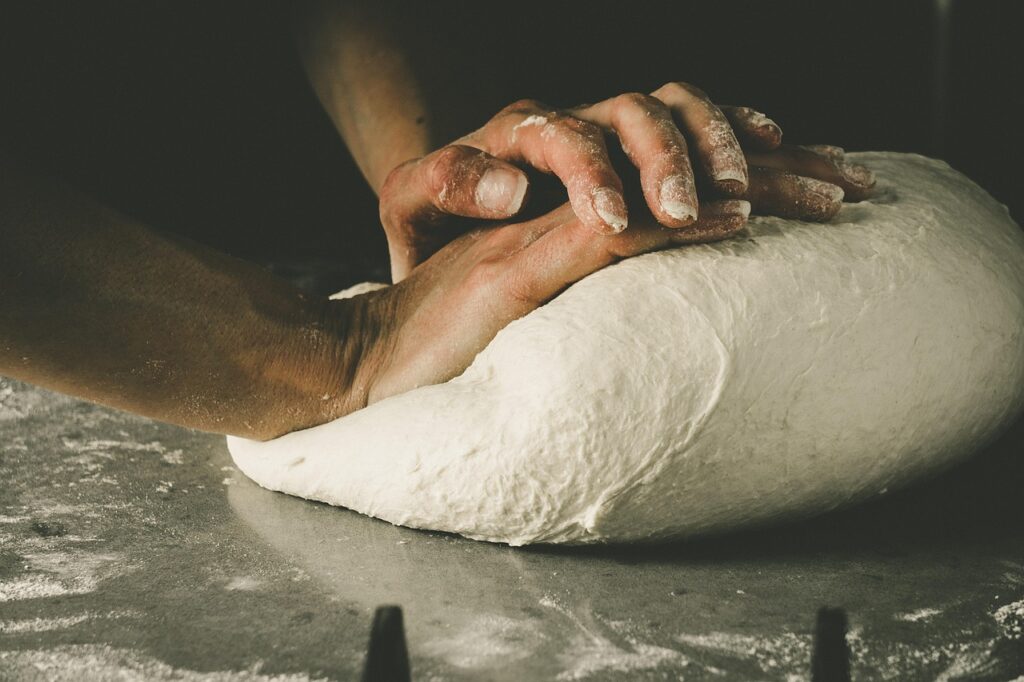
Hands-on arts and crafts have demonstrable effects our our emotional, mental, and physical health. As it turns out, science agrees. It is the “doing” of the craft that creates these benefits and not the created thing itself. When you do physical tasks that are repetitive, such as kneading dough or hand-sewing, you get into a state called flow state. The parts of your brain that are responsible for anxiety and stress become less active, and the parts of your brain responsible for critical thinking, problem solving, and a sense of calm become more active.
Research shows that doing crafts can help reduce symptoms of clinical depression, anxiety, and loneliness. Making things by hand has been helpful in offsetting the effects of dementia (4). Engaging in the arts engages the brain and helps to increase neuroplasticity. It reduces stress hormones, such as cortisol, and boosts dopamine. Dopamine increases our mental flexibility and reduces our chances of getting dementia (5). Coming together to do arts and crafts also brings people together in positive social settings, and that is good for our health, too.
AI is here to stay, and a little bit of it is not a bad thing, but science shows us that, just like chocolate chip cookies, too much can be a bad thing. The benefits of doing a craft with your hands helps your brain to heal and build new neural connections. Yes, arts and crafts make you smarter in the long run. They give you the benefits of improving your mental health and protect you from the effects of aging.
But I don’t like crafts!
That’s not a problem. Handmade crafts are one tool. The benefits come from engaging in anything that is tactile and engages the brain: gardening, baking bread, playing an instrument are just a few examples.
What’s stopping you from picking an activity and starting today?
(1) https://arxiv.org/pdf/2506.08872v1
(2) https://arxiv.org/pdf/2506.08872v1
(4) https://www.craftscouncil.org.uk/stories/4-reasons-craft-good-your-mental-health
(5) https://academic.oup.com/gerontologist/article/60/1/112/5203293