Have you ever picked up a craft like knitting, doodling, drawing, or baking bread and find that you lose track of time? You intended to sit down for just a few minutes, and you realize that it is now time for supper or well past your bedtime. If you have, congratulations. You have experienced flow state, and it is similar to meditation. It seems magical, but science says it is not woo-woo at all. Let’s take a deep and technical dive into what flow state is and why it is an important part of our mental and physical health.
What Does Flow State Feel Like?
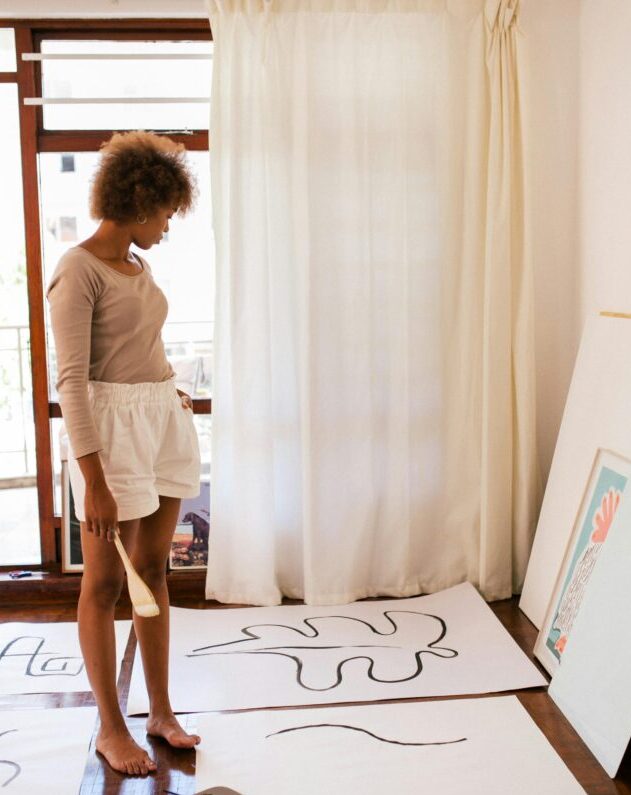
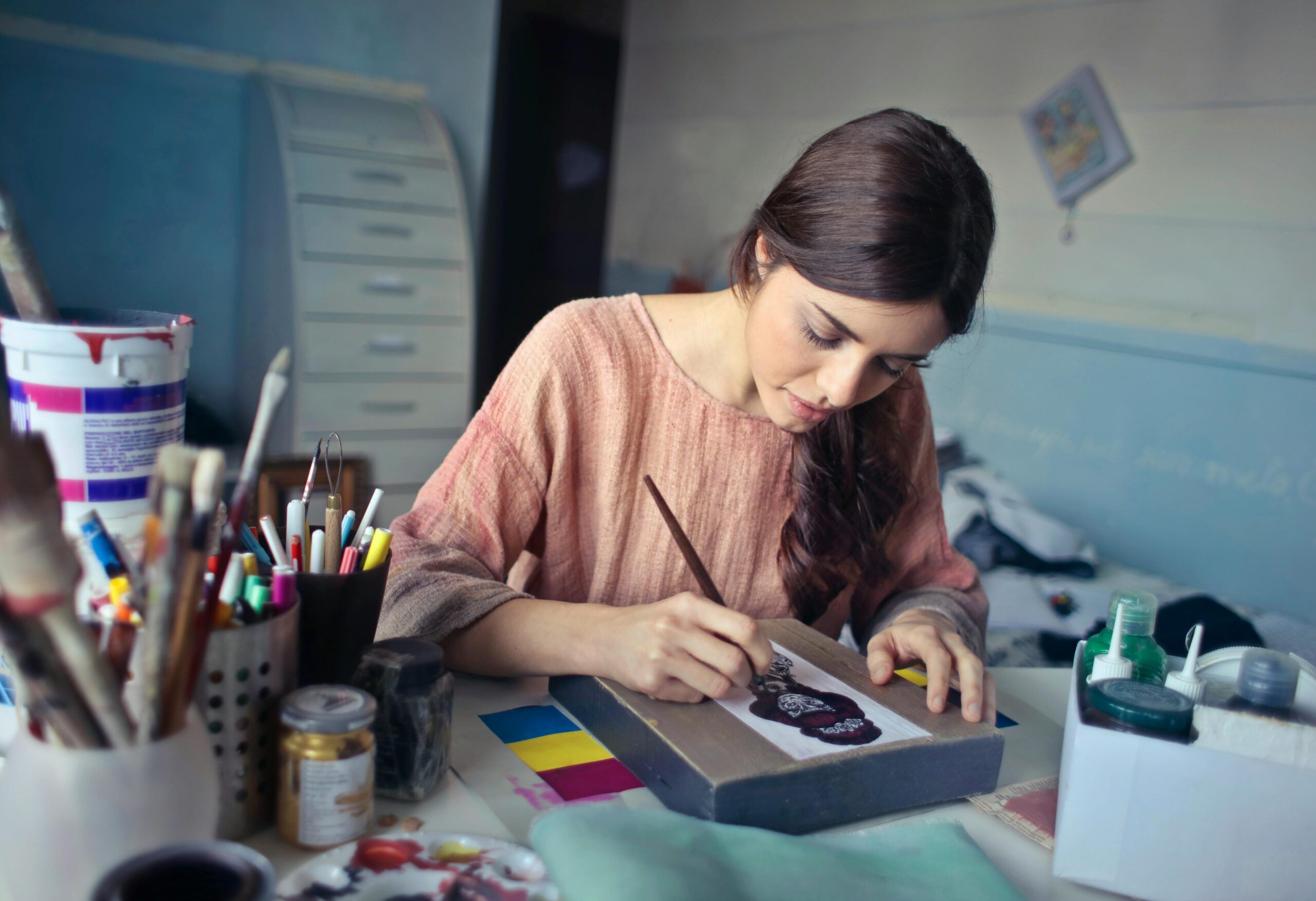
To put it simply, flow state feels like the outside world melts away. You pick up your knitting needles or your paint brush and start. At first, you are concentrating on your stitches or strokes. Then something happens. Without noticing, you find yourself in a world of your own thoughts and emotions. A sense of calm comes over you. Neuroscientists have shown that any rhythmic, repetitive movement can put you in this state, and that is where the science of flow state begins.
When you begin to enter into flow state, your breathing slows, and the tension in your body releases. Your racing thoughts calm down and the outside world fades into the background. You might not even notice that it is there at all. It happens when the part of your brain tied to motivation, reward, and emotional calm become more active. On the other side of the equation, the part of your brain responsible for anxiety and fight or flight give over control and calm down. You feel more playful and free.
Calming the Amygdala
The what? The amygdala is located deep inside your brain and is responsible for emotional processing, especially fear and anxiety. It connects emotion to memory, and is one of the organs responsible for fight or flight. You can blame the amygdala for sleepless nights spent ruminating about events or your fears. It is what causes us to respond to danger, but sometimes, it does not know when to shut down.
Certain activities calm the amygdala and get you out of that fight or flight mode. One of these is doodling or coloring. (1) Expressive writing is another one. This is different from the type of writing I am doing in this article where I am worried about structure, phrasing, and formatting. The type of writing that calms the mind is what is called a brain dump. Just pick up a journal and start writing anything that comes to mind. I actually did not think this was very helpful until I started doing it on a regular basis. Now, I am a firm believer in the power of this technique. I try to spend a few minutes several times a week doing it. Sometimes, I even combine journaling with doodling or other creative arts.
Decreased Stress Hormones and Increased Feel Good Hormones
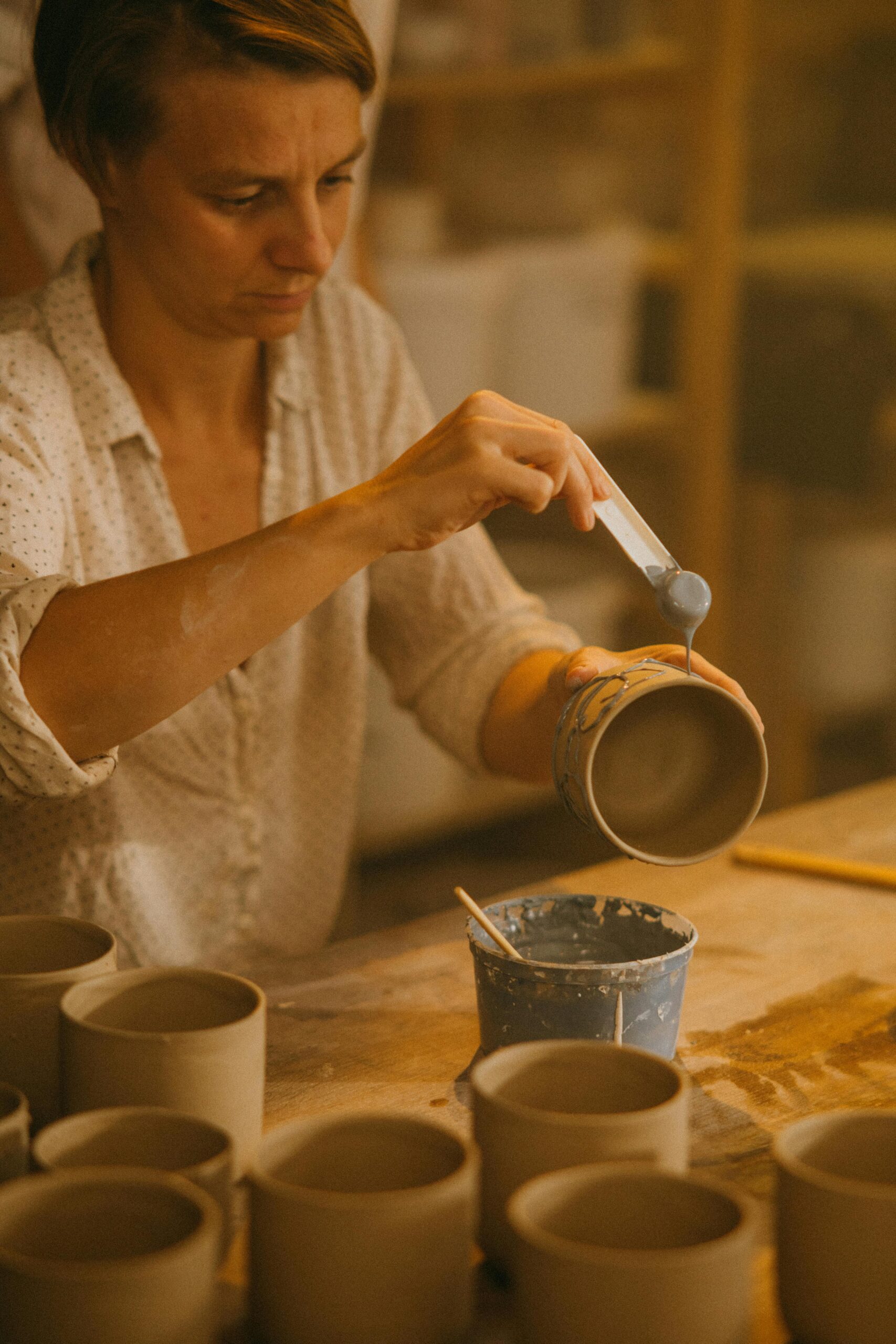
Research has shown that physical tasks, such as knitting or making pottery reduces cortisol, a hormone associated with stress. These activities also increase dopamine, which is associated with mental flexibility and a feeling of calm. (2) Dopamine is associated with making us feel motivated, pleasure, and reward. Repetition has a calming effect on the brain. That is why is appears when you are in the process of doing the craft.
Viewing art can also release dopamine. (3) It triggers the same hormones that you feel when you are in love. This was not found to be the case when the subject of the art was disturbing. Consequently, it is dopamine that our brain is seeking when we doom-scroll social media.(4) Dopamine is somethng that our brain wants more of any way we can get it. Arts and crafts are a good way to give your brain what it craves.
Serotonin is another hormone that is responsible for stabilizing our moods. It also helps with getting a good night’s sleep, learning, memory, and bone health among other things. Creating art raises serotonin levels. (5) The Mayo Clinic suggests people feel more happy when engaged in an art project, and this can make them more resilient in the face of stress. They also noted increased blood flow to parts of the brain associated with pleasure.
Good for You All Around
Numerous studies support that art improves people’s lives in other ways, too. For instance, creating art can help people find meaning and purpose. (6) People doing art experienced less chronic stress and a greater sense of optimism. They were also found to be more resilient after a stressful event. (7) Engaging in art allows for more creative expression and an opportunity for reflection.
What is even cooler is that the positive effects of creativity hold true even if you only do it for as little as 10 minutes a day. (8) These positive effects of creativity also seem to last into the next day. (9) This allows you to create a positive upwards mood spiral. Who couldn’t use that?
Creativity also had profound effects on aging. A large, global study found that those that engage in creative activities consistently on a regular basis seemed to slow down the aging clock of the brain. (10) Those that engaged in regular creative practices had brains with a biological age that was younger than expected for their chronological age. Creativity served as a protective factor against conditions like dementia and overall age-related cognitive decline.
The effects of art on the brain are not just a product of the imagination. Science says they are measurable, and they are very real. This is why the field of art therapy is gaining so much attention in recent years. Engaging in creativity is like first aid for a stressed mind.
The next time you find yourself doom-scrolling, stop for a moment and ask what you really need. It might just be that art is the real balm your brain is asking for.
(1) https://www.psychologytoday.com/us/blog/arts-and-health/201706/coloring-doodling-and-drawing-recent-research
(2) https://www.craftscouncil.org.uk/stories/4-reasons-craft-good-your-mental-health
(3) https://www.farnsworthmuseum.org/about/fam-blog/why-do-people-enjoy-art-unveiling-how-creativity-beauty-brush-away-stress-elevate-mental-wellness/
(4) https://pmc.ncbi.nlm.nih.gov/articles/PMC12322333/
(5) https://mcpress.mayoclinic.org/living-well/the-intersection-of-art-and-health-how-art-can-help-promote-well-being/
(6) https://doi.org/10.1177/1029864911403368
(7) https://doi.org/10.1348/135910707X251153
(8) https://www.psychologytoday.com/us/blog/feed-your-brain/202512/creativity-might-be-the-new-longevity-tool-for-your-brain
(9) https://psycnet.apa.org/record/2018-01905-009
(10) https://psycnet.apa.org/record/2018-01905-009